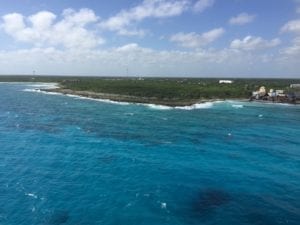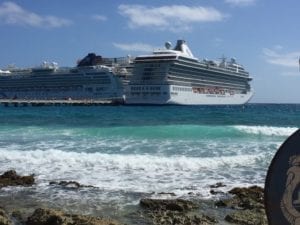
Costa Maya, Mexico

January 20, 2017

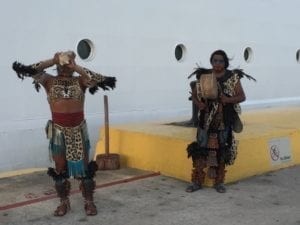
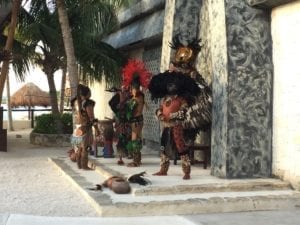
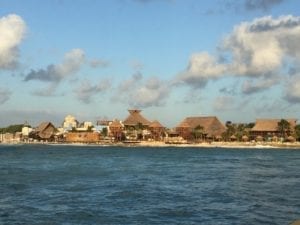
Today we had a full day of tours of the Mayan Ruins.  The first one we drove to was 2 ½ hours away and it was called Dzibanche with its pyramids and landscaped grounds, and the multi-leveled Mayan city of Kohunlich, surrounded by magnificent Cahoon palms. This town was once known for its beautiful pottery and splendid temples hidden within the jungle.
We had the chance to climb the tallest temple to get a view of the “Temple of the Owls” and the “Temple of the Captives” before it’s time to head off to famous Kohunlich. The next one we visited was the recently excavated archeological site of Kohunlich is named after the giant Cahoon palm trees that inhabit the immense site.

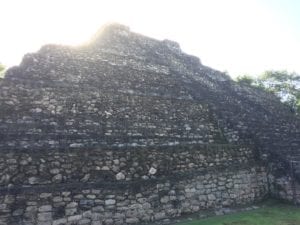
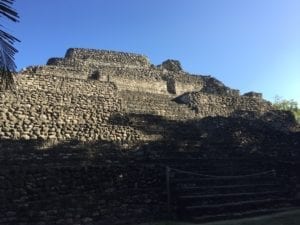
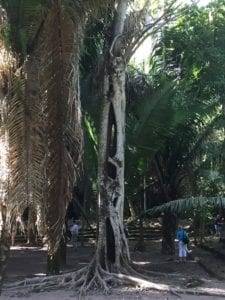
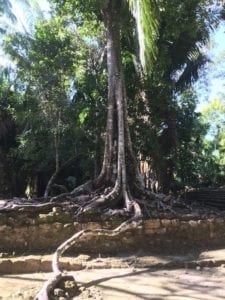
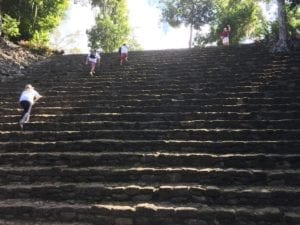
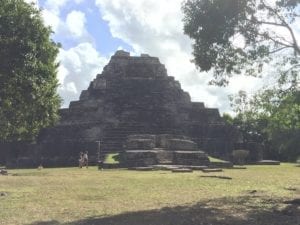
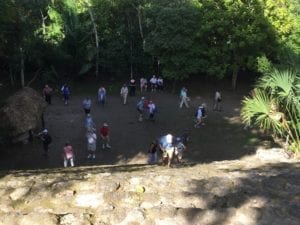
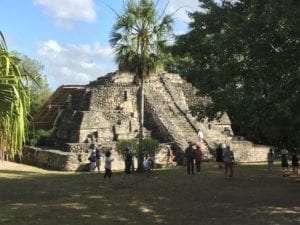
The next ruins we drove to were called Chacchoben, “The Place of Red Corn” Here, in this lush tropical setting, the excavated sacred temples and other structures gave us a sense of wonder picturing how it must have looked centuries ago when it was a thriving cultural center for the Mayans. We saw the original red paint on the stucco walls of one of the pyramids and the temple where a mural was found showing the astronomical positions of the planet Venus. We also had a chance to climb the Gran Basamento which took us above tree level and is where archaeologists found ceremonial offerings dating to around 1000 B.C.

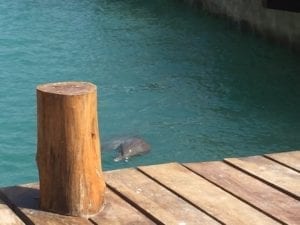
Swim with dolphins

Roatan, Honduras

January 19, 2017

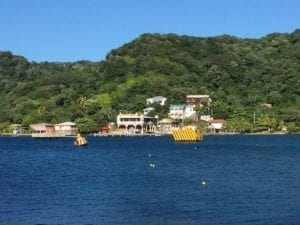
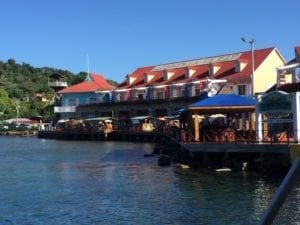
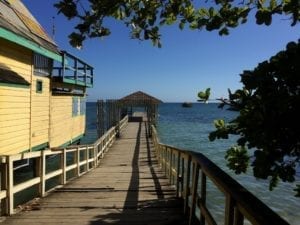
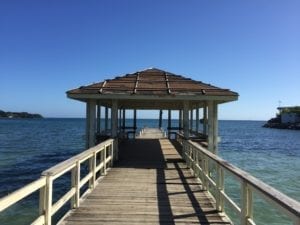
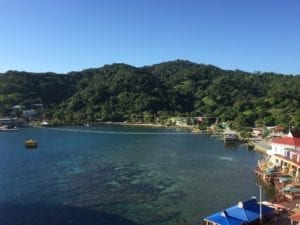
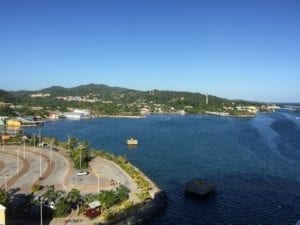
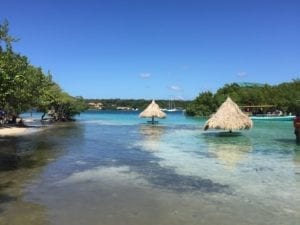
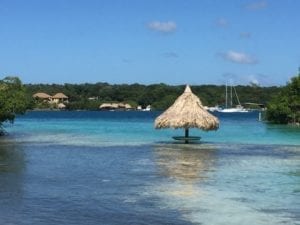
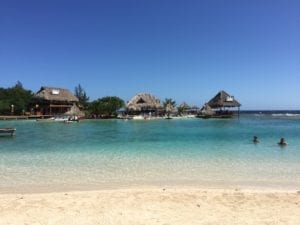
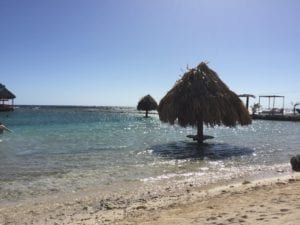
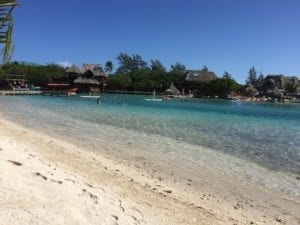
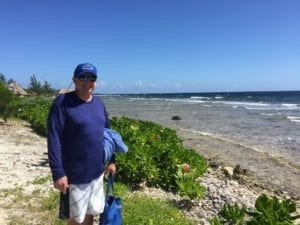
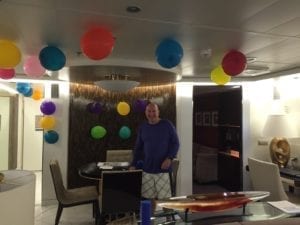
Today is John’s birthday, and he doesn’t know that when we get back to our suite on the ship, the general manager had them decorate it with balloons. While off the ship we drove to the Big French Key Beach on a motorboat and relaxed on the sugar-white sand. John had a chance to go snorkeling on a reef that was nearby. Our tour guide told us that Big French Key hadn’t changed much since Christopher Columbus explored the surrounding Bay Islands in 1503 and he described them as “incredibly green and fertile.” While there are a few new buildings scattered about Big French Key, the nearly 12-acre island remains a lush, beach-rimmed paradise caressed by gentle trade winds which makes it private and unique.
Follow us on our journey the next and last destination on this trip is Costa Maya, Mexico.

John

Our suite decorated with balloons for John’s birthday.

Puerto Limon, Costa Rica

January 17, 2016

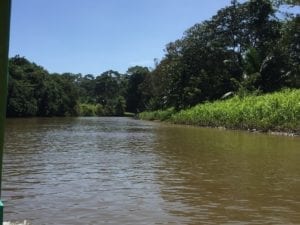
We drove from the pier to a private dock and boarded a pontoon boat which is designed to navigate the coastal river system. We cruised through the Tortuguero canals.

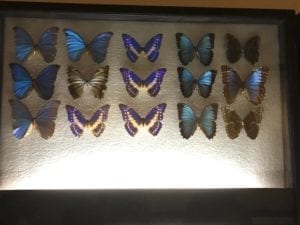
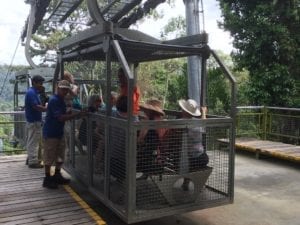
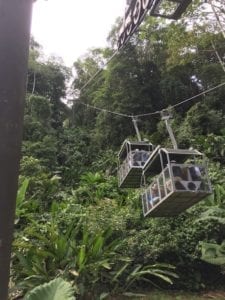
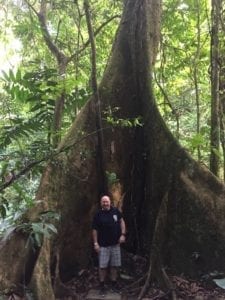
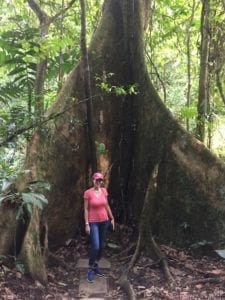
This ride into the jungle habitat serves as an excellent prelude to your next stop in the pristine Veragua Rainforest. The rainforest adventure begins with a guided tour through several exhibits housing indigenous animals such as snakes, frogs, and butterflies. Next, we rode an open-air aerial tram that will carry you into the rainforest canopy. It’s a window into a world that we couldn’t have experienced otherwise. At the halfway point, we got off the tram, and we walked the Trail of the Giants, which is a jungle path that winds past towering 300-year-old trees to a 65-foot waterfall. Then, after riding the tram back into the canopy, we had a nice lunch before returning to the pier.

Follow us on our journey the next destination is Roatan, Honduras.

John
Maria

Panama Canal Daylight Transit

January 16, 2016

Today it was our turn to sail through the Panama Canal Locks we visited yesterday. This was a very cool experience because we took a tour of the Gatun locks and saw exactly how they work so being on the ship made it that much better.

I couldn’t believe how close we were to the wall on either side of the ship its pretty amazing.

Follow us on our journey the next destination is Puerto Limon, Costa Rica.

A picture from our deck
Look at how close the ship is to the wall of the Panama Canal

Fuerte Amador (Balboa), Panama

January 15th – 16th, 2017

Today we took a unique tour of Fuerte Amador. Just imagine traveling down the tracks of the first transcontinental railroad in a comfortable domed railcar, while viewing what is widely considered to be the 8th wonder of the world; the Panama Canal, as well as spectacular Gatun Lake. This was a cool experience of traveling from one ocean to another, crossing the amazing continent of the Americas in just over one hour!

Once we arrived at the Pacific side railroad station, we boarded the train for a 75-minute rail journey. The glass-domed car gave us an outstanding panoramic view while traveling through the lush rainforest.

Crossing the Continental Divide, we were on the Atlantic side, where we disembarked the train and got on a bus to the Gatun Locks. Once at the locks, we climbed the 78 steps to the observatory platform where we were lucky enough to see a cargo ship passing and observed the functionality of the locks.

Here’s a little history about The Panama Railroad was the brainchild of a group of New York Financiers who wanted to create an easy passage for the increasing gold rush traffic. The railroad took five years and eight million dollars to build and was completed in 1855. During its first 12 years of operation, the train carried over 750 million dollars worth of gold and silver and collected one-quarter of one percent of each shipment as the duty. The railroad was rebuilt in 1909 during the construction of the Panama Canal, and without it, the canal could not have been built.

Follow us on our journey the next destination is the Panama Canal Daylight Transit.

Manta, Ecuador

January 13, 2017

Today we woke up at 3:30 am and drove to Quito airport to take an hour flight to Manta to meet up with the ship. Once we got to the ship, we went to our suite and dropped off our luggage went to eat breakfast and then took a nap. The only bit of Manta we saw was the drive from the airport to the pier. We also rented out Prive and invited some of the great people we met while on the ship and we had a great meal and a great time.

Follow us on our journey the next destination is Fuerte Amado (Balboa), Panama.

Prive
Maria & John at Dinner at Prive with great friends we met while on the ship.
Maria & John – with our friends Trudy and David who we met while on the Machu Picchu excursion.

Lima/Machu Picchu (Callao), Peru

January 11, 2017

Today once again we had to wake up early because we had an extremely long day ahead of us. After a quick breakfast, we then boarded our shuttle bus and headed to the train station to board the train that was going to take us to the bus that was going to drive us to Machu Picchu. It’s like that jingle “Take the train to the plane” lol

Machu Picchu and everything we learned about the Incas and how they used to live and what they built was utterly fantastic. Pictures are good, but they don’t do it justice. We were lucky enough that it only drizzled a little bit, so we were able to get amazing pictures.

Follow us on our journey the next destination is Quito, Ecuador.

The train which is taking us to Machu Picchu
Our lunch on the train ride

Maria & John

John
Maria

Maria & John

Our table on the train where we ate dinner

Entertainment for our ride back to the bus

Arica, Chile

January 08, 2016

Today we are going to see the most iconic manmade wonders in and around Arica, many of them pre-Inca, including the world’s oldest mummies and giant geoglyphs in the barren Atacama Desert, which is the driest in the world.
The first stop on tour was just outside the city limits, where we visited the San Miguel de Azapa Archaeological Museum. Exhibits reveal the intricacies of several ancient cultures and include mummies that predate the ones in Egypt by more than 3,000 years. Other displays showed how the semi-nomadic Chinchorro people lived along the coast and in the desert. Still, the geoglyphs are the most impressive sights in the remote desert. The giant, unique and geometric works of art were created by Indians scratching the salty surface of the brightly colored rocks and even using primitive paints.
Next, we drove south on the Pan-American road to the middle of the desert and Pampa Chaca, where Diaz Fleming, one of the greatest sculptors in Chile, has created the impressive Tutelar Figures as an homage to the Andean people. Rising out of the desert sands, they depict sacred symbols of the indigenous Aymara people. We also were treated to a show with native dancing.

Our last stop on today’s tour is Colon Square, one of Arica’s most popular spots. Its architectural highlight is the pink-and-white Church of San Marcos. The famed French architect and structural engineer Gustave Eiffel designed the church, which aside from the wooden doors, is constructed entirely of metal. Now more than 125 years after its construction, it has been deemed a Chilean national monument.

Follow us on our journey the next destination is Lima/Machu Picchu, Peru.

Mummy

Maria at Tutelar Figure
Tutelar Figure

Church of San Marcos
Colon Square

Coquimbo, Chile

January 06, 2016

Today we drove around Coquimbo heading towards La Serena, and we passed by the main square called Plaza de Armas.

We stopped by the old lighthouse in La Serena which looks like a castle with a tall tower. We also stopped and saw a Catholic Church of St. Augustine which was great because they were in the middle of mass, so we got a chance to record it in Spanish. Today’s tour was short because there isn’t much to see or do in Coquimbo.

Follow us on our journey the next destination is Arica, Chile.

La Serena Lighthouse

Church of St. Augustine

Valparaiso, Chile

January 04th – 05th, 2017

Today we drove to the central part of the city so we can start the walking tour of this city full of colorful graffiti art everywhere. The city consists of two completely different sections: the lower part adjacent to the port area is known as El Plan, and the hillside section is known as Los Cerros or El Plan Alto. We rode on one of Valparaíso‘s most picturesque funiculars to continue our walking tour to the bar/restaurant for a short stop for refreshments at the quaint yet beautiful square located on Alegre Hill.

Follow us on our journey the next destination is Coquimbo, Chile.