Granada (Motril) ( 2025), Spain

June 15, 2025 – June 15, 2025

Marvel at the sumptuous palaces, lush gardens and imposing citadels that are the Alhambra. This UNESCO World Heritage Site is one of the most famous legacies of Moorish rule in Spain. Meander the narrow cobblestone streets of nearby Albaicín, the ancient Arabic quarter, or see a flamenco performance in the whitewashed caves of Sacromonte, originally settled by gypsies.

Gaze out over Malaga from the Gibralfaro Castle hill before exploring the city in-depth on an enlightening walk, taste some tapas in a typical taberna and learn about nougats, a truly Spanish sweet treasure!. Constructed in the 10th century on a hilltop where a lighthouse once stood, the castle rises majestically out of a forest of pines and eucalyptus trees. From this elevated vantage point, you will enjoy a spectacular view of Malaga, an Andalusian city with Moorish roots and an illustrious past. It looks even more magnificent up-close as you will discover while meandering the atmospheric streets. You will pass highlights such as the 1st-century Roman amphitheater, the home where Pablo Picasso was born and glorious Malaga Cathedral, whose construction started in 1528. It dragged on for centuries and the planned second tower still hasn’t been built, giving rise to the cathedral’s nickname: the “one-armed woman.”

If you would like to see where and what we are while visiting Granada (Motril)
Granada (Motril), Spain

April 18,  2023

Marvel at the sumptuous palaces, lush gardens, and imposing citadels that are the Alhambra. This UNESCO World Heritage Site is one of the most famous legacies of Moorish rule in Spain. Meander the narrow cobblestone streets of nearby Albaicín, the ancient Arabic quarter, or see a flamenco performance in the whitewashed caves of Sacromonte, originally settled by gypsies.

The Moors’ last stronghold before falling to Spain’s Catholic monarchs in 1492, Granada still bears a Moorish influence. There is the Alhambra, the fortress-palace of the Nasrid sultans.

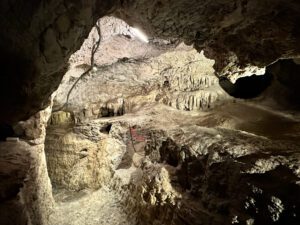
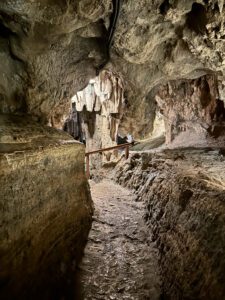
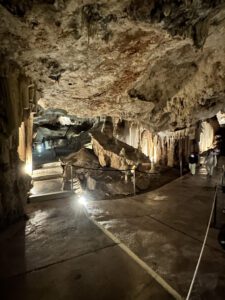
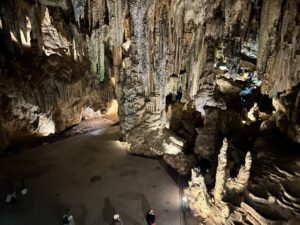
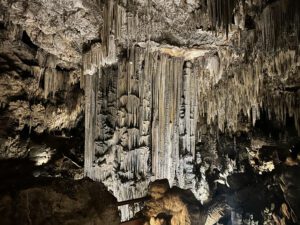
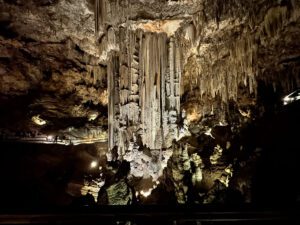
Discover geological wonders such as the world’s largest stalagmite in the Caves of Nerja and then meander through the lovely old quarter in the seaside village of Nerja.

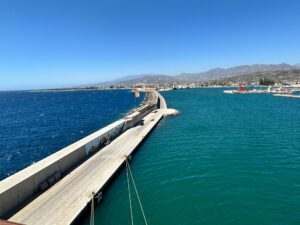
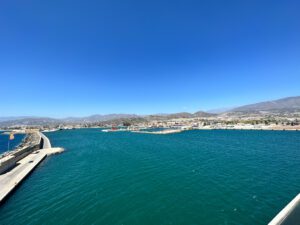
After departing from the pier, you will enjoy a picturesque coastal drive to the seaside village of Nerja, a former fishing village that has recently become a popular resort town. A short distance away, you will find the Caves of Nerja, a series of caverns that stretches nearly three miles and contains the world’s largest stalagmite.

Although archaeological evidence shows that the caves were occupied from about 25,000 BC to the Bronze Age, it wasn’t until 1959 that they were rediscovered. Cave paintings reveal that the earliest inhabitants were hunters, followed by fishermen and farmers.

As you walk through the caves, you can expect to see eerily illuminated stalactites and stalagmites in the Hall of Ghosts, formations that look like frozen waterfalls, and geological debris in the Hall of the Cataclysm that an earthquake caused millennia ago. It will be an extraordinary experience that you will not soon forget.

Maria
Maria & John